

Every time you apply for a loan, a credit card, or even some installment plans, there is a quiet number working behind the scenes that helps decide whether you get a yes or a no. That number is your credit score. Most Filipinos have never seen theirs, yet it can shape which loans you get, what interest you pay, and sometimes even where you can rent.
💡 Highlights
- A credit score is a three-digit number, usually from 300 to 850, that shows lenders how likely you are to pay back what you borrow.
- A credit report is the full record of your borrowing, and your credit score is the number calculated from it.
- In the Philippines, credit data is handled by the government’s Credit Information Corporation (CIC) and three accredited credit bureaus.
- A score of 700 and above is generally seen as good, while below 600 is considered poor.
- The biggest thing that affects your score is simple: paying your bills and loans on time.
- You can request your credit report, and by law you are entitled to a free one once a year.
- A low score is not permanent. With steady, on-time payments, it can be rebuilt over time.
What Is a Credit Score?
A credit score is a three-digit number that sums up how trustworthy you are as a borrower, based on your past money behavior. As cited from a 2025 Philippine credit guide, it is a number, usually ranging from 300 to 850, that represents your creditworthiness, meaning how likely you are to repay money you borrow.
Think of it as your financial reputation turned into a number. If you have borrowed before and paid on time, your score goes up, and lenders see you as safe. If you have missed payments or defaulted, your score drops, and lenders see you as risky. The higher your score, the easier it is to get approved for loans and cards, and often at better interest rates too.
So your credit score is basically a report card for how you handle money you owe. And just like in school, a good record opens doors, while a bad one makes things harder.
What Is the Difference Between a Credit Score, a Credit Report, and a Credit Rating?
These three sound alike and get mixed up all the time, so let us sort them out simply.
A credit report is the full story. As cited from a Philippine credit guide, it is a complete summary of your borrowing and repayment activity, including your loans, credit cards, and how you paid them. It is the detailed record.
A credit score is the number that comes from that story. It takes all the information in your credit report and boils it down into one three-digit number that lenders can read at a glance.
A credit rating is a similar idea, but it usually refers to companies and governments rather than ordinary people. Big businesses and even countries get credit ratings, often shown as letter grades, to show how safely they can borrow. For a regular person, the number you care about is your credit score.
So in short: the report is the full record, the score is your personal number, and the rating is the version used for companies and governments.
How Does the Credit Score System Work in the Philippines?
The Philippines has its own setup, and it helps to know how it works. As cited from Philippine credit information resources, the Credit Information Corporation, or CIC, is a government agency created under Republic Act 9510, also called the Credit Information System Act. It is the country’s official, central place where credit data is collected.
Here is how it flows. As cited from Philippine credit guides, banks, lending companies, cooperatives, credit card companies, and even some telecom and lending apps send your credit information, both the good and the bad, to the CIC. The CIC gathers all of this into your credit report. Then, as cited from Philippine credit resources, the CIC works with three accredited credit bureaus, CIBI Information Inc., TransUnion Philippines, and CRIF Philippines, which use that data to produce your credit score.
One important protection: as cited from Philippine credit guidance, lenders can only pull your credit report with your consent, and your data is protected under both the Credit Information System Act and the Data Privacy Act. If you spot an error, you have the right to dispute it.
What Is a Good Credit Score in the Philippines?
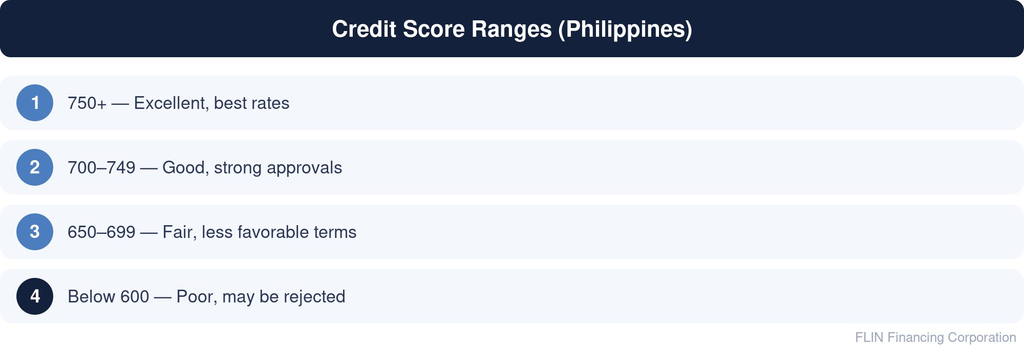
This is what everyone wants to know, so here is the simple breakdown. As cited from Philippine credit guides, scores generally fall on a 300 to 850 scale, and here is roughly how lenders read it:
- 750 and above is excellent, and you are very likely to be approved at the best rates.
- 700 to 749 is good, and you are in a strong position for approvals.
- 650 to 699 is fair, still decent but with less favorable terms.
- Below 600 is considered poor, and loans may be rejected or come with high interest.
As a simple rule, aim for 700 and above, and you will be in good shape for most loans and cards. And remember, the exact number can vary a little between the three bureaus, since each uses its own model, but the rule of thumb is always the same: the higher, the better.
What Affects Your Credit Score?
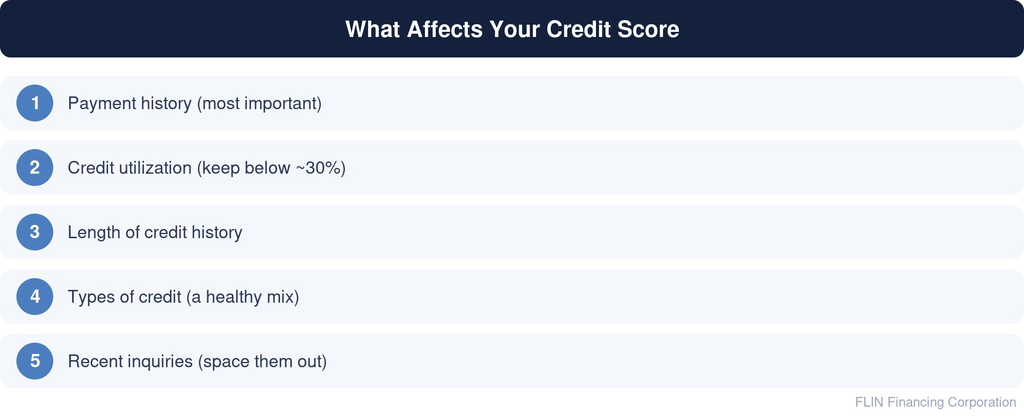
Your score is not random. It is built from your habits, and knowing the main factors lets you take control.
Payment history, the most important
Do you pay your loans and bills on time? On-time payments lift your score, while late payments and defaults drag it down. This matters more than anything else.
Credit utilization
This is how much of your credit limit you are using. Keeping your balances below about 30 percent of your limit is ideal, and maxing out your cards hurts you.
Length of credit history
The longer you have been responsibly using credit, the better, since it gives lenders more to judge you by.
Types of credit
Having a healthy mix, like a card and a loan, and handling them well, shows you can manage different kinds of credit.
Recent inquiries
Applying for many loans or cards in a short time can make lenders nervous, so space out your applications.
How Do You Build or Improve Your Credit Score?
Whether you are starting from zero or recovering from a low score, the path is the same, and the good news is that it works. Start by bringing all your debts current, giving priority to any that are already overdue. Then, the golden habit: pay everything on time, every time.
Even six months of consistent, on-time payments can start to boost your score. Keep your credit card balances low, avoid applying for too many things at once, and if you are building from scratch, using a small, manageable loan or a secured card and repaying it faithfully can slowly build your reputation.
Why Does Your Credit Score Matter?
It matters more than most people realize. A good score means easier loan and credit card approvals, often at lower interest rates, which saves you real money. Your credit standing can also affect things beyond loans, like some postpaid phone plans, certain rentals, and even background checks for jobs in industries like finance and BPO.
In other words, your credit score quietly follows you through many parts of adult life. Building a good one is one of the most useful and lasting things a working person can do for their future self.
Very often, a damaged credit score is not about being careless, it is about debt that grew beyond what your income could handle, leading to missed payments that dragged your score down. If that is your situation, the fastest way to start rebuilding your score is to get that debt under control first.
That is where FLIN can help, working as a debt resolution facilitator and not a lender. Instead of offering you another loan, FLIN looks at your whole situation and helps bring your debts into one manageable plan, working to lower your payments and negotiate with your lenders so you can start paying consistently again. And consistent, on-time payments are exactly what rebuilds a credit score over time. A short, no-pressure chat is enough to see where you stand. Your credit score reflects your past, but it does not have to trap your future. Click below for free consultation!
Find more about other article in managing your debt below: