
If you’re managing more than one debt right now, a credit card, an online lending app, or even more than two, you’re not alone, and you’re not failing at money. You’re dealing with many people’s problems, multiple due dates, multiple interest rates, and no single view of what you actually owe.
Getting out of debt in the Philippines usually means one of three paths
- Paying debts down yourself using a structured method (like snowball or avalanche),
- Negotiating directly with each lender, or consolidating multiple debts into a single, lower,
- Fixed monthly payment through a licensed provider.
The right path depends on how many debts you have, how overdue they are, and whether you can realistically negotiate on your own.
💡 Highlights
- Debt management isn’t one method, it’s a decision tree based on how many lenders you owe and how overdue you are.
- Two DIY strategies (snowball and avalanche) work well if you have 1-2 debts and steady income.
- Once you’re juggling 3+ apps, cards, or lenders, the coordination cost itself becomes a major hidden drain missed payments from confusion, not inability to pay.
- Debt consolidation combines multiple debts into one fixed monthly payment, often at a lower blended rate, paid directly to your existing creditors.
- Illegal online lending apps and harassment have specific, reportable violations under Philippine regulation and know your rights before you assume you have none.
What Is Debt Management?
Debt management is the ongoing process of organizing, prioritizing, and repaying what you owe in a way that protects your finances and your peace of mind. It covers everything from tracking your balances and due dates, to restructuring loans, to negotiating with creditors when payments become impossible.
There are two broad levels. The first is everyday management, where you are currently on your loans and simply want to pay them down efficiently and avoid slipping. The second is recovery management, where you are already struggling, missing payments, or fielding collection calls, and you need a structured way out. Both are valid. The tools just differ.
Why Debt Management Matters Right Now
Consumer borrowing in the Philippines has grown quickly. Bank lending to households has been expanding far faster than overall loans, with consumer credit rising by more than 20 percent in recent quarters and credit cards driving a large share of that growth. Household debt has climbed to record levels in peso terms and now sits at roughly 13 percent of the country’s economic output, a new high.
On its own, more borrowing is not a crisis. It reflects wider access to credit. The risk is personal, not national. Rising prices and cost-of-living pressure mean many families are borrowing to cover ordinary expenses rather than one-off purchases, and that is exactly the pattern that turns manageable debt into a cycle. When new loans pay off old ones, the total keeps climbing and the interest quietly compounds.
Signs Your Debt Has Become Unmanageable
You do not need to wait for a default notice to know something is wrong. A few honest warning signs:
- Your total monthly debt payments take up more than 35 to 40 percent of your income.
- You are using one card or loan to pay another.
- You only ever pay the minimum on your credit cards.
- You have started missing due dates or juggling which creditor to pay this month.
- You avoid checking your balances because the number stresses you out.
If two or more of these sound familiar, it is time to move from maintenance to a real management plan.
Core Debt Management Strategies
Most people benefit from getting the basics right. These strategies work whether you owe fifty thousand pesos or half a million.
1. Map everything in one place
List every debt: the lender, the outstanding balance, the interest rate, the minimum payment, and the due date. Usually it is the unsecured, high-interest ones, credit cards and online lending apps, that deserve your attention first.
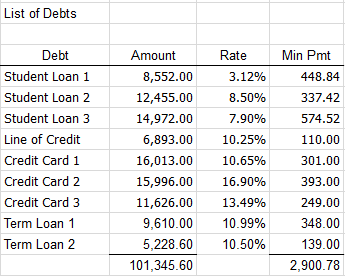
Example of easy debt loan list to do
2. Choose a payoff method
Two proven approaches:
- The avalanche method targets the debt with the highest interest rate first while paying minimums on the rest. Mathematically, this saves you the most money.
- The snowball method targets the smallest balance first for a quick psychological win, then rolls that freed-up payment into the next debt. This keeps motivation high.
Neither is wrong. Pick the one you will actually stick with.
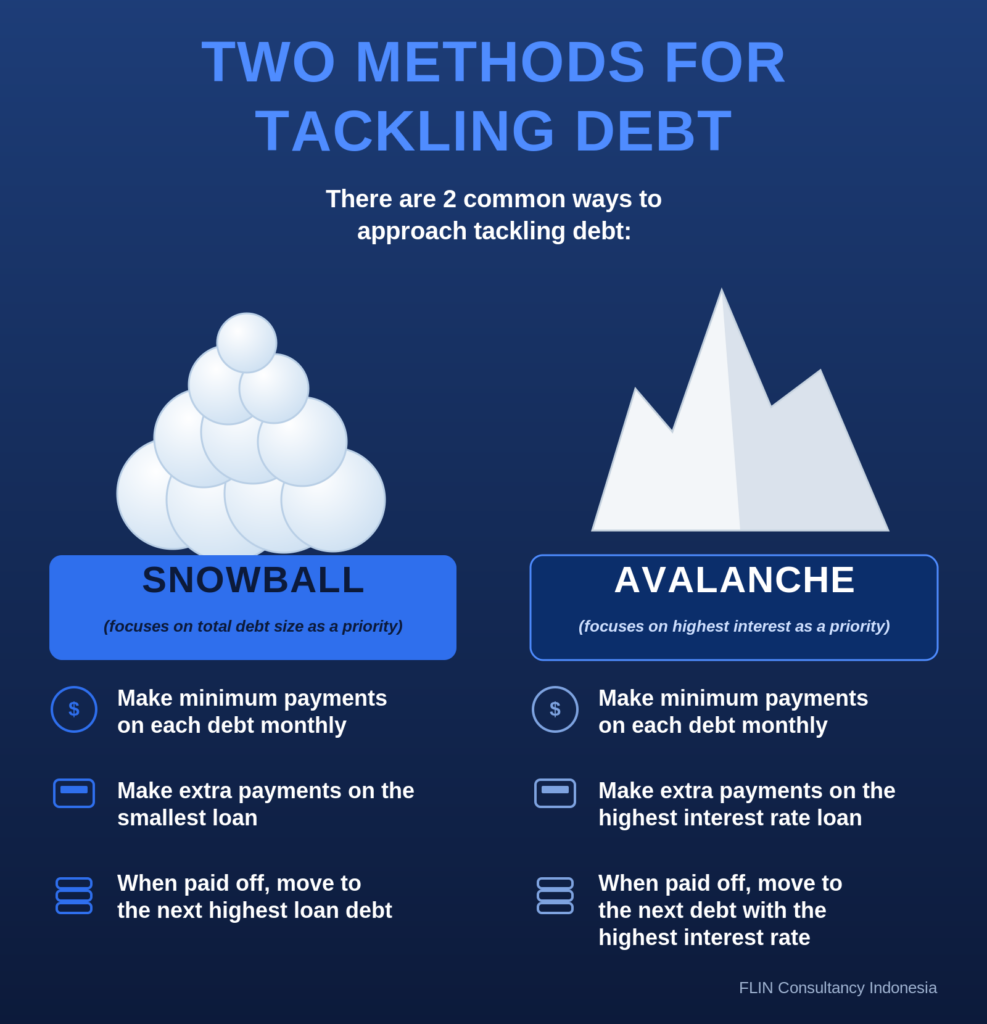
The difference between snowball and avalanche method
3. Build even a small buffer
A modest emergency fund, even ten to twenty thousand pesos, stops the next surprise expense from becoming the next loan. This is what breaks the borrowing cycle for good.
4. Talk to your creditors early
Banks and lenders in the Philippines generally prefer a paying customer over a defaulting one. Contacting them before you miss a payment gives you far more room to negotiate lower rates, waived penalties, or a hardship arrangement.
Formal Debt Management Options in the Philippines
When budgeting alone is not enough, several structured options exist. Here is how they work locally.
Loan or credit card restructuring
Debt restructuring means formally changing the terms of an existing debt to make it manageable, usually by converting a revolving balance into a fixed installment plan, extending the term, or reducing the rate.
In legal terms this is treated as a novation under the Civil Code, meaning the old agreement is replaced by a new one that both sides consent to.
Bank hardship programs
Many major issuers run their own internal hardship arrangements for borrowers facing temporary difficulty, such as job loss or medical emergencies. These can include reduced rates, short payment holidays, or waived penalties, usually with proof of hardship.
Balance transfer
Some issuers let you move a balance to another card at a low or zero promotional rate for six to twelve months, typically for a small transfer fee. This can buy breathing room to attack the principal, but only if you avoid new spending and clear it before the promo ends.
Debt settlement
In default situations, a creditor may accept a lump-sum payment for less than the full amount owed. This can bring real relief, but it should always be documented in writing, and it will usually be reported as settled rather than paid in full, which affects your credit standing for several years.
Consolidation into a single channel
Debt consolidation combines multiple debts into one repayment stream so you make a single, predictable payment instead of chasing several due dates. Done well, it lowers the total interest you pay and dramatically reduces the mental load of managing many creditors at once. This is often the cleanest starting point for someone with debts spread across cards, salary loans, and lending apps.
When to Get Help
If you’ve read this far and recognized your own situation, three or more debts, a missed payment because you lost track of a due date, or minimum payments that keep creeping up a spreadsheet and willpower alone are fighting a structural problem, not a discipline problem.
FLIN’s Debt Consolidation program is built specifically for salaried professionals in this exact situation. Instead of adding another loan on top of what you already owe, FLIN combines your existing debts, across banks, cards, and lending apps, into a single, structured monthly payment. Funds are paid directly to your existing creditors, not deposited into your account.
Check other articles to help you in managing the debts :