
Your credit score quietly decides a lot: whether your loan gets approved, what interest you pay, and sometimes even whether a landlord or employer trusts you. Yet most Filipinos have never actually seen theirs. The good news is that checking it is easier than you think, and you are allowed to see your own record.
Key Highlights
- In the Philippines, your credit data is held by the government’s Credit Information Corporation (CIC) and three accredited bureaus.
- The easiest way to check online is through the Lista PH app, which gives you your CIC credit report plus a credit score.
- Getting your report usually costs a small fee, around 199 pesos through Lista PH, though free access shows up during occasional promos.
- Some bank apps and services like GCash show a score for free, but that is not your official CIC credit score.
- “Being blacklisted” is not an official status. It just means your credit report shows negative marks like unpaid or overdue debts.
- Always use official channels only, and avoid sketchy websites that promise a “free credit score,” since some are scams.
- Check your score once or twice a year, ideally a few months before applying for a big loan.
Why Should You Check Your Credit Score?
Before the how-to, here is the why. Checking your credit score lets you see exactly how lenders view you before you apply for anything. As cited from a Philippine credit guide, checking your report regularly helps you spot mistakes or fraudulent accounts early, so you can fix them before they cost you a loan.
Think of it like a yearly check-up, but for your finances. Reviewing your credit report once a year is good for your financial wellness and tells you whether you are creditworthy enough to be approved for loans and credit cards. It is far better to find a problem yourself, quietly, than to be surprised by a rejection later.
Where Can You Check Your Credit Score in the Philippines?
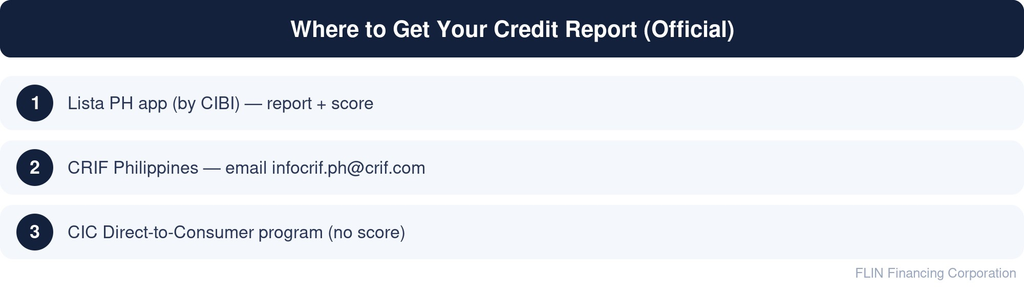
You cannot just Google your score, so it helps to know the real, official places. Your credit data sits with the Credit Information Corporation, the government’s central credit registry, and you can get your report through its three accredited bureaus: CIBI Information Inc., TransUnion Philippines, and CRIF Philippines.
There are a few official ways to request your credit report. The most popular is through CIBI’s Lista PH app, which gives you your report with a score. You can also request it from CRIF Philippines by email, or through the CIC’s Direct-to-Consumer program via partner lenders. Stick to these official channels, because they are the only ones that give you real, accurate data.
How Do You Check Your Credit Score Online?
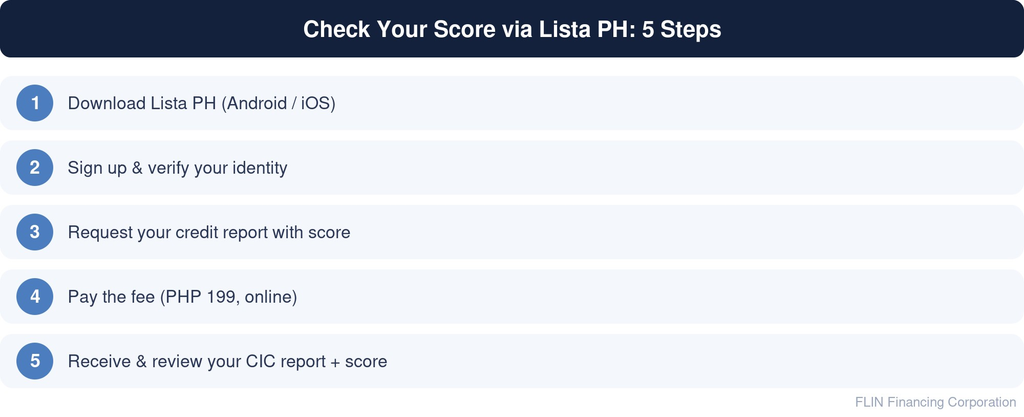
For most people, the easiest online route is the Lista PH app, so here is the simple step-by-step:
- Download the Lista PH app, which is available on both Android and iOS.
- Sign up and create an account, then complete the identity verification steps.
- Request your credit report with score inside the app.
- Pay the fee, which as cited from the CIC is 199 pesos per request, paid online.
- Receive and review your CIC credit report and credit score.
That is really it. The whole thing can be done from your phone, without visiting any office. As cited from a Philippine credit guide, some apps also require a short online verification call to confirm it is really you, so have a valid ID ready.
How Do You Get Your Credit Report From the CIC?
If you want your full credit report, you have a few choices. As cited from the CIC, the four main ways to get your report are through the Lista PH app by CIBI, through CRIF Philippines by emailing [email protected], and through the Direct-to-Consumer program.
That Direct-to-Consumer program is worth explaining. It lets partner financial institutions, called Accessing Entities, hand you your own CIC credit report, either online or by walk-in.
One thing to note, the report through this program comes without a credit score, so if you specifically want the number too, the Lista PH app or CRIF is the better route. You can see the list of participating partners on the official CIC website.
Can You Check Your Credit Score for Free?
There are a couple of free options, but with a catch. Some banks show a credit score inside their online apps, and services like GCash give users a “GScore.” But that GScore is GCash’s own internal number, not your official CIC credit score, so other lenders will not use it. It is useful as a rough guide, but it is not the real thing.
One important warning: avoid sketchy websites that promise a “free credit score,” because some of them are scams designed to steal your information. If a site is not the CIC or one of its three accredited bureaus, do not trust it with your details.
How Do You Check if You Are Blacklisted for Credit?
Many people worry they have been “blacklisted,” so here is the truth. Being blacklisted is not an official status. Banks just use the word as shorthand for a high-risk borrower, based on the negative marks in your credit report.
So to check if you are effectively “blacklisted,” you do the same thing: get your credit report and look for the red flags. Review your report for adverse entries like overdue balances, loan defaults, or collection-related notes, since those are what make lenders say no.
It also helps to note the Transaction Reference Number, or TRN, on your report, in case you need to dispute an error later. There is also an industry watchlist kept by the Credit Management Association of the Philippines, sometimes called the CMAP negative file, which functions in a similar way. But the bottom line is the same: your CIC report is where you find out where you really stand.
Sometimes you check your credit report and the picture is clear but painful: several overdue debts, collection notes, a score dragged down by loans that grew beyond what your income can handle. If that is what you are looking at, the most important step is not just to watch the number, it is to get that debt under control so you can start paying steadily again.
That is where FLIN can help, working as a debt resolution facilitator and not a lender. Rather than handing you another loan, FLIN looks at your whole situation and helps bring your debts into one manageable plan, working to lower your payments and negotiate with your lenders so you can get current and stay current. And steady, on-time payments are exactly what turns a damaged report around over time. A short, no-pressure chat is enough to see where you stand. Checking your score is the first brave step. If it reveals debt that has gotten heavy, there is a clear way to start setting it right. Click below for free consultation!
Check below to read more articles about how to solve your debt :